
Affiliate Disclosure: This website is an independent affiliate site. We may earn a commission if you purchase through links on this page, at no extra cost to you. See our full disclosure and editorial policy.
Ask people what stresses them at work and they will usually name the big things: deadlines, difficult clients, job insecurity. But occupational-health researchers have long known that a second, quieter category does enormous cumulative damage — the daily grind of operational friction. The printer that jams during the pre-meeting rush. The toner that ran out with nobody responsible for reordering. The twenty-minute hunt for a working scanner. The dozen small administrative chores that belong to no one and therefore interrupt everyone.
Individually, each of these is trivial. Collectively, they are a stress engine. This article goes deep on the science of how workplace friction converts into chronic nervous-system activation and, eventually, burnout — and then lays out a practical, three-part blueprint for designing calm into an office: subtract the friction, protect the attention, and regulate the physiology. Whether you run a company, manage a team, or simply want your own workday to stop grinding you down, the mechanics below apply.
The Hidden Tax: Cognitive Load and Micro-Decisions
Your working memory — the mental workspace where you hold and manipulate information — is famously limited. Every unresolved obligation occupies a slice of it. Cognitive psychologists call the total demand on this system cognitive load, and here is the key insight: load is load, whether it comes from meaningful work or from meaningless logistics. "Remember to order toner," "find out why the second floor can't print," and "chase the maintenance vendor again" occupy the same mental machinery as your actual job.
Worse, unfinished tasks do not politely wait their turn. Psychology has recognized since Bluma Zeigarnik's classic work in the 1920s that interrupted and incomplete tasks intrude on the mind more than completed ones — the so-called Zeigarnik effect. An office full of small, perpetually unfinished operational chores is therefore an office full of open mental loops, each one quietly taxing attention and generating the background hum of "I'm forgetting something." Add decision fatigue — the measurable depletion that comes from making many small choices — and the operational side of office life starts to look like what it is: a parallel job nobody applied for.
Cognitive load doesn't distinguish between strategy and toner. Every open operational loop — broken equipment, missing supplies, unassigned chores — occupies the same limited mental workspace as your real work.
Interruptions: The Most Expensive Minutes in the Office
Friction rarely stays in its lane; it interrupts. And interruption science is unambiguous about the cost. Research by Gloria Mark and colleagues at the University of California, Irvine — the most cited work in this field — found that after a significant interruption, it takes on the order of twenty minutes or more to fully re-engage with the original task. People compensate by working faster after interruptions, and the same research shows that this compensation comes at a price: measurably higher stress, frustration and sense of time pressure.
Now count the interruptions a single failing piece of office equipment generates in a week: the person it blocks, the colleague they ask for help, the manager who gets the complaint, the improvised workaround that breaks something else. Multiply by every unmanaged device, every supply stock-out, every "quick question" that operational ambiguity creates. This is how a merely annoying office becomes a physiologically stressful one — not through drama, but through arithmetic.
From Friction to Burnout: What Chronic Hassle Does to a Team
The World Health Organization classifies burnout in the ICD-11 as an occupational phenomenon: the result of "chronic workplace stress that has not been successfully managed," expressed in three dimensions — exhaustion, growing mental distance or cynicism toward the job, and reduced professional efficacy. Note what that definition does not require: catastrophe. Burnout is not built from single dramatic events but from sustained, unrecovered activation — precisely what a high-friction environment produces.
Occupational-health researchers capture this with the concept of daily hassles: minor, recurring stressors whose cumulative impact on wellbeing rivals or exceeds that of major life events, because they never stop and the body never gets the all-clear. In the office, chronic friction shows up as a recognizable cluster:
The encouraging flip side: because the damage is architectural, so is the remedy. A calmer office is designed, not wished for — and the design has three parts.
Part One: Subtract the Friction — Delegate What Isn't Your Job
The highest-leverage move against operational stress is also the least glamorous: remove entire categories of hassle from your team's cognitive load by handing them to specialists. This is the stress-management case for outsourcing non-core operations, and it is stronger than the purely financial one. When maintenance, monitoring and resupply of a whole equipment category become someone else's contractual responsibility, you do not just save money — you close dozens of open mental loops at once and eliminate a reliable source of interruptions.
Print infrastructure is the textbook example, because it concentrates every friction type in one place: hardware that fails at the worst moments, consumables that run out unpredictably, and support that defaults to whoever happens to be nearby. Managed print services — where a provider supplies, monitors, maintains and restocks the fleet under a single contract — convert that entire stress category into a background utility, typically cutting costs 30–40% in the process.
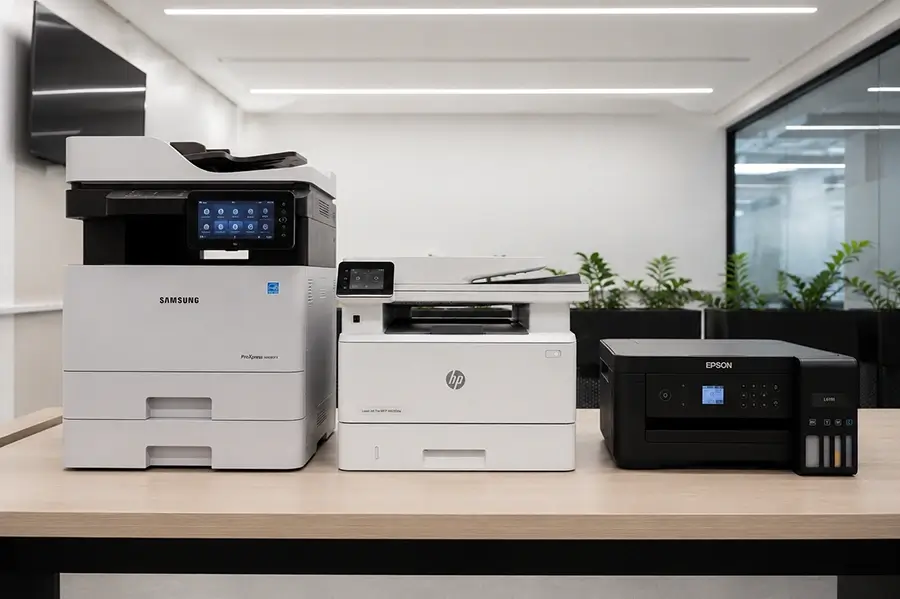
A good real-world illustration of what mature print outsourcing looks like is Reinkjet, a Brazilian managed-print provider that has spent 26 years running exactly this model for companies in the Blumenau and Joinville region: full printer rental with preventive and corrective maintenance included, 24/7 remote monitoring of the fleet, usage and savings reports, and same-day supply delivery — with client cases across textile, legal and healthcare sectors reporting cost reductions of 30–40% alongside the operational relief. The details are local; the principle is universal. Whatever your region, the structure to look for is the same: one accountable specialist, monitoring that catches failures before your staff does, and consumables that arrive before anyone notices they were low.
The delegation test: For any recurring office operation, ask two questions — is this our core business, and does handling it in-house make anyone's day calmer? If the answer to both is no, it is a candidate for a managed contract. Print fleets, as providers like Reinkjet demonstrate with over 2,500 managed devices, are usually the easiest first win: high friction, mature service market, measurable savings.
The same logic extends outward: IT support contracts, facilities management, courier logistics. Every category you delegate is a category your people stop carrying in working memory — and cognitive load, remember, is the raw material of workplace stress.
Part Two: Protect the Attention You Just Freed
Subtracting friction frees attention; the second design task is making sure the office does not immediately spend it on new interruptions. Three practices do most of the work:
- Create interruption protocols. Distinguish "stop everything" issues from "batch it" issues, and give the latter a channel that is checked on a schedule rather than shouted across the room. Most operational questions can wait ninety minutes; almost none of them currently do.
- Institute focus blocks. Protect at least one daily window — meeting-free, message-free — where deep work is the norm. Interruption research is clear that fragmentation, not workload alone, drives the stress-and-time-pressure spiral.
- Assign every recurring chore an owner. Ambiguity is an interruption generator: tasks that belong to nobody interrupt everybody. A simple ownership map for the remaining in-house operations closes the "who handles this?" loop permanently.
Part Three: Regulate the Physiology — Because Some Stress Always Gets Through
Even a well-designed office cannot eliminate stress; deadlines and difficult days are part of work. The third layer of the blueprint is therefore physiological: giving the nervous system deliberate, reliable ways to shift out of fight-or-flight during and after the workday, so activation never gets the chance to accumulate into the chronic state the WHO definition warns about.

The body's master down-shift mechanism is the vagus nerve — the primary pathway of the parasympathetic "rest-and-digest" system. When vagal activity rises, heart rate slows, breathing deepens and the stress cascade winds down; every genuine relaxation technique, from slow exhale-weighted breathing to meditation, works partly by engaging it. The workplace problem has always been practical: most of those techniques demand time, privacy or practice that an office day rarely offers.
Where Pulsetto fits
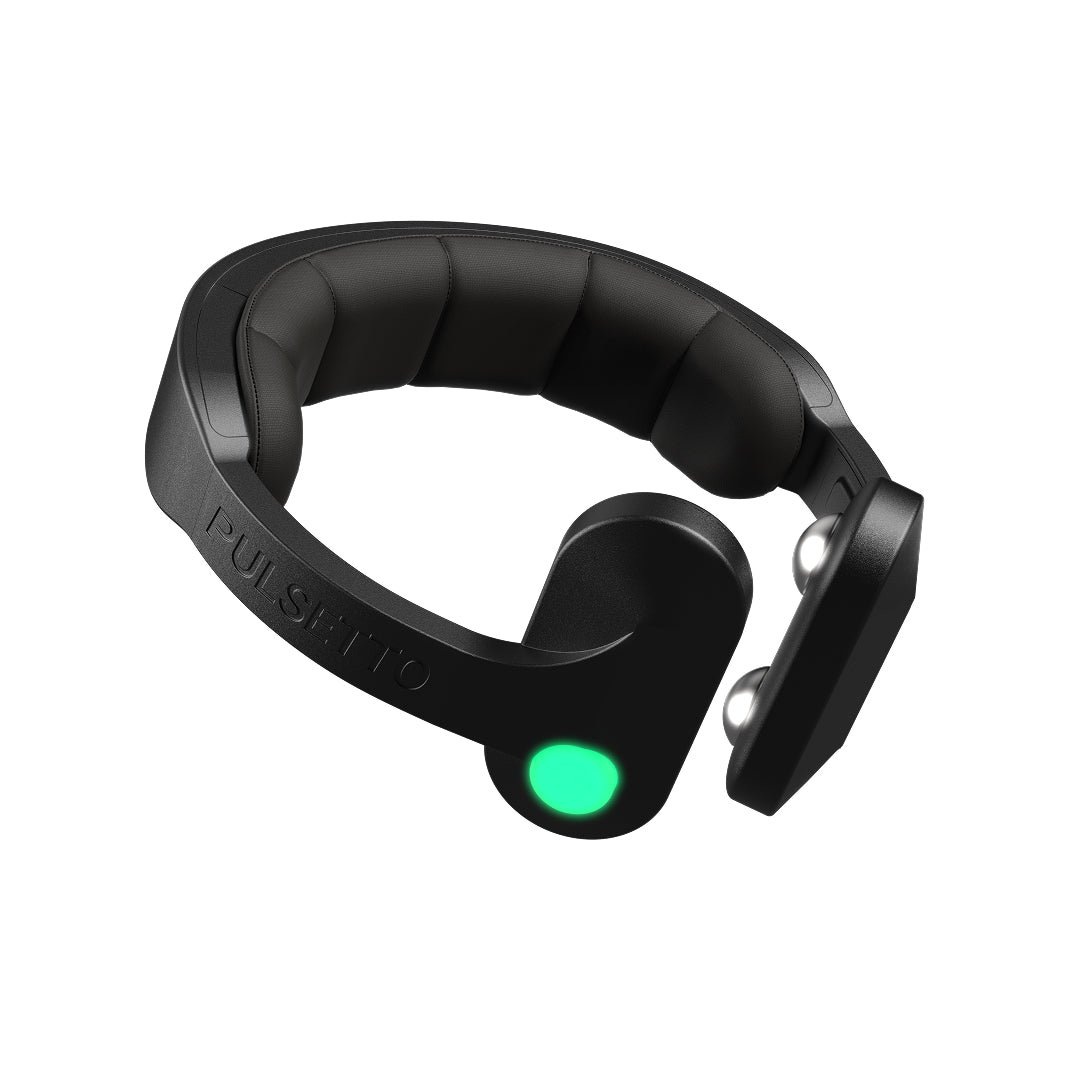
That practicality gap is what the Pulsetto vagus nerve stimulator addresses. It is a neck-worn wearable delivering gentle, non-invasive stimulation in sessions of about four minutes, app-controlled, with five programs — including stress relief and, notably for this article, burnout recovery. Four minutes fits between meetings; the device works while you sit at your desk or decompress after work; and no technique needs to be mastered first. For a team — or a manager — whose stress load is the cumulative, operational kind described above, it functions as a scheduled counterweight: a physical reset that does not depend on the day cooperating.
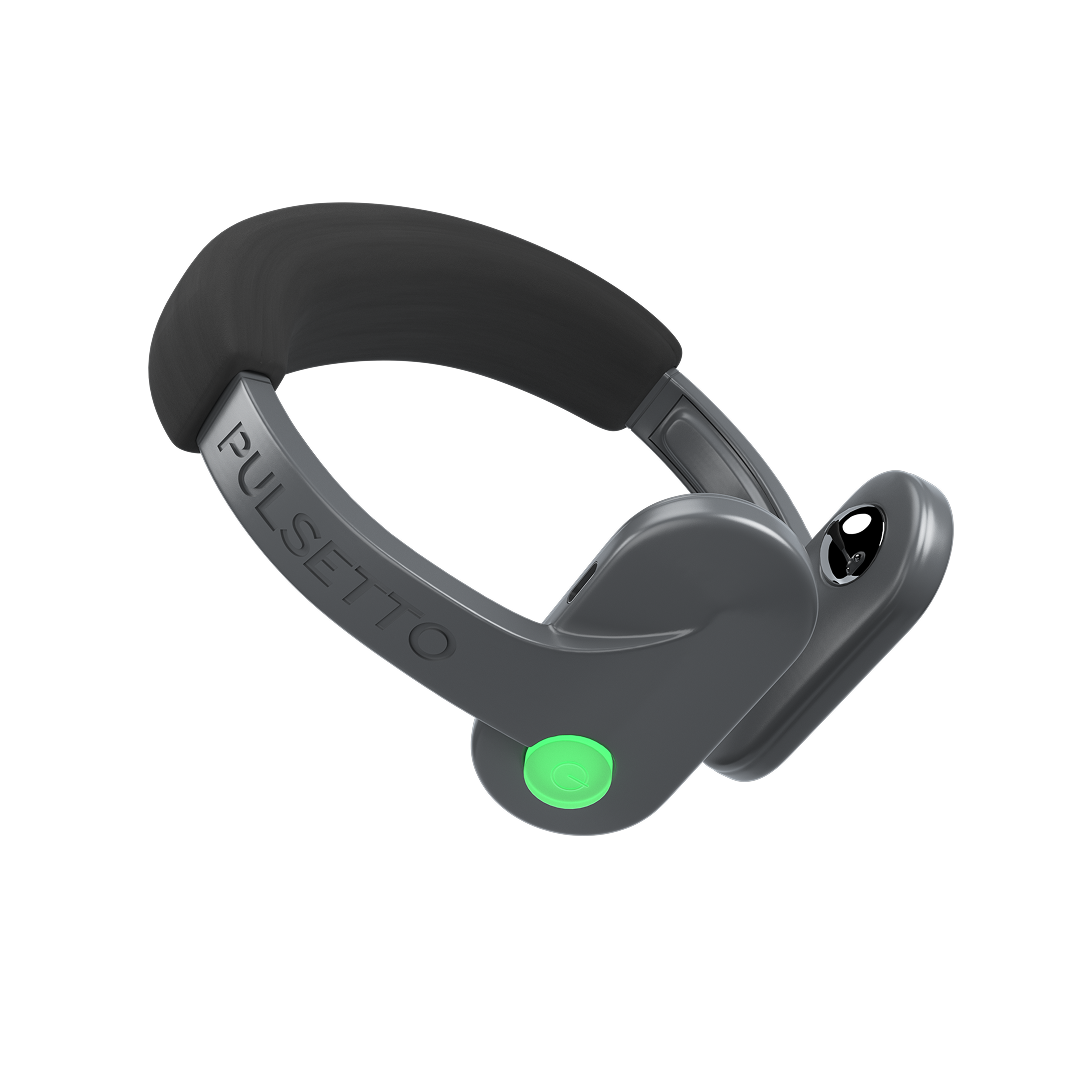
Pulsetto Vagus Nerve Stimulator
Pulsetto FIT bundle · Free shipping
$296 $570
✓ 30-day money-back guarantee · 2-year warranty
Order Pulsetto Now →Two honest notes, as always. The vagus nerve mechanism is established science, but the evidence base for consumer wearables used at home and at work is younger than the clinical research — which is exactly why the 30-day money-back guarantee is the right way to buy: run it as a two-week experiment against your own stress and sleep, and let your own data decide. And a device is one layer of the system, not a substitute for the other two; no gadget compensates for an office that interrupts its people forty times a day. Our full Pulsetto review covers the device in depth.
The Calm-Office Blueprint, Assembled
Here is the whole design, compressed into a sequence any team can start this quarter:
- Audit the friction. For two weeks, log every operational hassle — equipment failures, supply stock-outs, "who handles this?" moments. The list is your stress map.
- Delegate the biggest category. Move the highest-friction non-core operation (for most offices: print) to a managed contract with monitoring and supplies included. One decision, dozens of loops closed.
- Assign owners to the rest. Every remaining recurring chore gets a name attached. Ambiguity ends.
- Protect one deep-work block daily. Meeting-free, message-free, defended by policy rather than heroism.
- Build in physiological resets. Normalize short recovery breaks — a walk, slow breathing, or a four-minute vagus nerve session — especially after high-stress stretches, and a deliberate down-shift ritual at the end of the day.
- Re-measure after ninety days. Interruption counts, equipment downtime, and how people say they feel. Calm, like cost, is trackable.
The Bottom Line
Workplace stress is not only made of big dramas; much of it is manufactured, hour by hour, by operational friction that occupies working memory, generates interruptions, and never lets the nervous system stand down. The remedy is architectural: subtract the friction by delegating non-core operations to accountable specialists, protect the attention you free with interruption discipline and focus blocks, and give the physiology itself scheduled ways to reset. Design all three layers, and the office stops being a stress engine — and starts being just a place where work gets done.
30-day money-back guarantee · Free shipping · 2-year warranty
Frequently Asked Questions
What is workplace friction and why does it cause stress?
Workplace friction is the accumulation of small operational hassles — failing equipment, supply stock-outs, admin chores, interruptions — that sit outside your actual job. Each one adds cognitive load and triggers a small stress response, and because they recur daily without resolution, they keep the nervous system in low-grade alert that accumulates into fatigue, irritability and eventually burnout.
How is burnout different from ordinary stress?
The World Health Organization classifies burnout in the ICD-11 as an occupational phenomenon resulting from chronic workplace stress that has not been successfully managed, with three dimensions: exhaustion, mental distance or cynicism toward the job, and reduced professional efficacy. Ordinary stress is acute and recoverable; burnout is what builds when activation is sustained and recovery never happens.
Does outsourcing office operations really reduce stress?
Yes — delegating non-core operations such as print fleet management removes entire categories of recurring hassles, interruptions and micro-decisions from the team's cognitive load at once. Managed print providers such as Reinkjet report client cost reductions of 30–40% alongside the operational relief, so the financial and wellbeing benefits compound.
Can vagus nerve stimulation help with work stress?
Vagus nerve stimulation activates the parasympathetic "rest-and-digest" system — the physiological counterweight to the fight-or-flight state that workplace stress sustains. Pulsetto delivers gentle, non-invasive stimulation in roughly four-minute sessions, with dedicated stress-relief and burnout-recovery programs, and its 30-day money-back guarantee makes it a low-risk experiment to run on your own workdays.