
Affiliate Disclosure: This website is an independent affiliate site. We may earn a commission if you purchase through links on this page, at no extra cost to you. See our full disclosure and editorial policy.
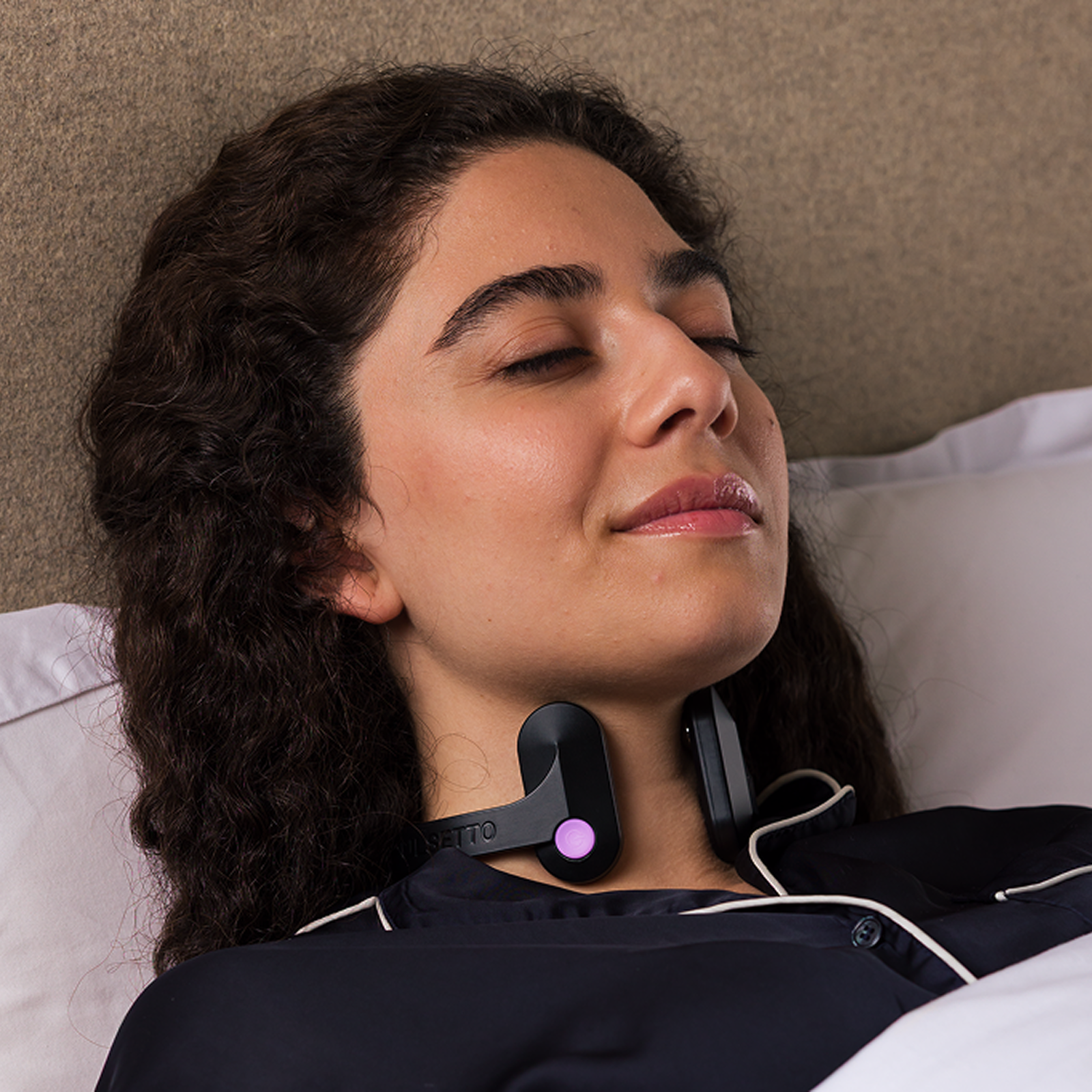
Open TikTok, Instagram or even a mainstream news app this month and you will run into the same word again and again: cortisol. The "stress hormone" has become the internet's favorite villain of 2026 — blamed for belly fat, puffy "cortisol face," poor sleep, anxiety, brain fog and burnout, with a matching economy of supplements, adaptogen powders, "cortisol cocktails" and $18 smoothies promising to flush it away.
The frenzy reached a new peak in mid-July 2026, when a widely shared Fox & Friends segment put a certified nutritionist on air specifically to "separate fact from fiction" about the cortisol craze — noting that social feeds have been "flooded with wellness influencers warning about the dangers of high cortisol," and asking whether the hormone is truly a threat "or a victim of online hyperbole."[1] It is a fair question. And the honest answer — the one that actually helps you — sits in the messy middle between the hype and the eye-rolling. This article walks through what the science really says, what the experts are pushing back on, and what genuinely works to calm a stressed body, based on the physiology rather than the trend cycle.
First, What Cortisol Actually Is (and Why You Need It)
Cortisol is not a toxin. It is a steroid hormone produced by your adrenal glands, and it is essential to being alive and functional. It follows a daily rhythm: levels peak in the morning to help you wake up and get moving, then taper across the day to let you wind down at night. As the nutritionist in that Fox segment put it, cortisol "helps us get out of bed in the morning… gives you that energy to get up and go."[1] It regulates metabolism, blood pressure, blood sugar and inflammation, and it powers your fight-or-flight response in genuine emergencies.
The problem was never cortisol existing. The problem is cortisol staying elevated — the difference between a hormone doing its job in short bursts and a stress-response system stuck in the "on" position for months. That distinction is the entire ballgame, and it is exactly what the viral version flattens.
What the Experts Are Actually Pushing Back On
The expert backlash is not "stress doesn't matter." It is far more specific — three targeted corrections to the social-media narrative:
1. "Cortisol face" and "cortisol belly" are viral labels, not diagnoses. Medical experts have been blunt that these are not clinical conditions. Genuine cortisol-excess disease — Cushing's syndrome — is rare, affecting on the order of 40 to 70 people per million, and is usually driven by medication or tumors, not by a stressful week at work.[2] A puffy face, experts note, is far more often about salt, hydration, sleep or diet than about your adrenal glands.[1]
2. You cannot meaningfully self-diagnose from a feed. A UC Davis psychologist pointed out that hashtags such as #HowToReduceCortisol and #CortisolLevels have racked up more than 140 million views while "often promoting misleading or unscientific claims."[3] At-home saliva tests and viral checklists cannot give you an accurate hormonal picture; only proper clinical testing ordered by a doctor can.
3. Most of the products are selling you certainty you don't have. The detox teas, "cortisol cocktails" and adaptogen blends largely lack strong clinical support for the dramatic claims attached to them, and treat a hormone you need as something to be purged.
The expert consensus of 2026 isn't "relax, stress is fake." It's this: stop panicking about a single hormone you can't self-measure, stop buying detoxes for a made-up diagnosis — and start supporting the system that actually regulates stress.
But Here's What the Debunkers Sometimes Undersell
In the rush to correct the hype, some takes swing too far the other way and imply that stress itself is overblown. It is not. Chronic psychological stress is a genuine, well-documented health issue — and the same Mayo Clinic guidance the debunkers cite notes that sustained high cortisol can disrupt nearly every system in the body, contributing to anxiety, sleep problems, weight changes and burnout.[1] The nuance is simple: you probably don't have a cortisol disorder, but you might genuinely have a chronically activated stress response — and that is worth taking seriously.
Even better, the research on reversing it has gotten stronger. In one of the most notable stress studies of the year, a year-long randomized clinical trial from the University of Pittsburgh and AdventHealth (published in the Journal of Sport and Health Science, 2026) found that adults who did 150 minutes of weekly aerobic exercise showed a significant reduction in long-term cortisol, measured through hair samples, compared to a control group.[4] The takeaway is empowering, not alarming: chronic stress physiology is real, and it responds to the right inputs.
Hype vs. Reality: A Field Guide to the Cortisol Craze
Here is the viral narrative side by side with what the evidence actually supports, so you can navigate the noise:
| The viral claim | What the science says | Verdict |
|---|---|---|
| "Cortisol face" — stress makes your face puffy | Facial puffiness is usually salt, hydration, sleep or diet. Cortisol-driven "moon face" belongs to rare Cushing's syndrome. | Mostly myth |
| "Cortisol belly" — stress causes belly fat | The stress–weight link is real but complex and indirect; "cortisol belly" is not a clinical diagnosis. | Oversimplified |
| Cortisol is bad and should be minimized | Cortisol is essential — it wakes you, fuels you and regulates metabolism. The issue is chronic elevation, not presence. | False framing |
| Detox teas & "cortisol cocktails" lower it | Little strong clinical evidence for the dramatic claims; you're often buying a mocktail, not medicine. | Unproven |
| Chronic stress harms your health | Well documented — sustained stress affects sleep, mood, metabolism and immunity. | True |
| Exercise can lower long-term cortisol | A 2026 year-long RCT found 150 min/week of aerobic activity significantly reduced hair-cortisol. | Evidence-backed |
| Calming the nervous system helps stress | Activating the parasympathetic system (breathing, vagus nerve) is the body's own stress brake. | Sound science |
Notice the pattern in the right-hand column: the myths all involve blaming or "detoxing" a single hormone, while the truths all involve supporting the system that regulates stress. That system has a master switch — and it is not in your smoothie.
Skip the detox teas. Go straight to your body's off-switch.
Pulsetto stimulates the vagus nerve — your nervous system's built-in brake on the stress response — in just 4 minutes a day. No supplements, no hype, no guesswork. Try it risk-free with a 30-day money-back guarantee.
See How Pulsetto Calms Your Body →The Real Lever: Your Vagus Nerve and the Parasympathetic Brake
To calm a stressed body, you do not chase cortisol — you activate the system designed to switch stress off. Your autonomic nervous system has two branches: the sympathetic ("fight-or-flight"), which drives the stress response and cortisol release, and the parasympathetic ("rest-and-digest"), which restores calm. The main highway of that calming branch is the vagus nerve — the longest cranial nerve in the body, running from the brainstem down through the neck to the heart, lungs and gut.
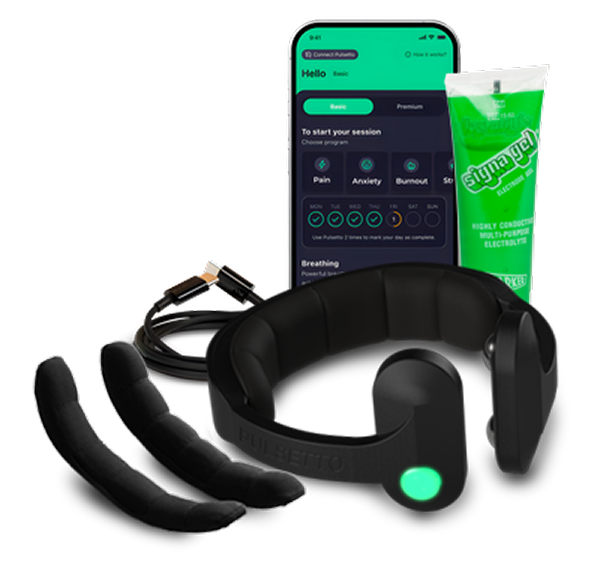
When vagal activity rises, heart rate slows, breathing deepens, and the whole fight-or-flight cascade — cortisol included — winds down. This is why slow, exhale-weighted breathing, meditation, humming and cold exposure to the face all help: each one nudges the vagus nerve and shifts you toward the parasympathetic state. It is also why the vagus nerve, not cortisol, is arguably the more useful thing to focus on. Instead of fearing a hormone you can't measure, you can train the system that regulates it. We break the mechanism down further in our explainer on how vagus nerve stimulation works, and in our guide to heat, stress and sleep.
What Genuinely Helps — Ranked by Evidence
If you want to lower a chronically activated stress response, here is where to actually put your energy, strongest evidence first:
| Approach | How it works | Effort | Evidence |
|---|---|---|---|
| Regular aerobic exercise | Lowers long-term cortisol; builds stress resilience | Higher | Strong (2026 RCT) |
| Consistent, sufficient sleep | Restores the cortisol rhythm and stress regulation | Medium | Strong |
| Slow, exhale-weighted breathing | Directly raises vagal (parasympathetic) tone | Low | Strong |
| Vagus nerve stimulation | Activates the parasympathetic brake on fight-or-flight | Low | Established mechanism; consumer evidence maturing |
| Morning daylight exposure | Anchors the natural cortisol-rhythm peak | Low | Good |
| Detox teas / "cortisol cocktails" | Claim to flush cortisol | Low | Weak / unproven |
Two things jump out. The genuinely effective options are unglamorous and mostly free — move, sleep, breathe, get morning light. And the two lowest-effort, physiologically direct options both work through the same door: the vagus nerve.
Where Pulsetto Fits — Honestly
Breathing exercises are free and excellent, but many people struggle to make them a consistent habit, especially when stressed — the exact moment the technique matters most. That practicality gap is what a vagus nerve stimulator is built to close. Pulsetto is a neck-worn device that delivers gentle, non-invasive stimulation to the vagus nerve in sessions of about four minutes, guided by a free app with dedicated programs for stress relief, anxiety, deep sleep, burnout recovery and pain management. You sit back, and the device engages the parasympathetic brake for you.

Two honest notes, because credibility matters more than hype — the very thing this whole article is about. First, the underlying mechanism (vagus nerve stimulation) is genuinely established science, but the evidence base for consumer wearables used at home is younger than the clinical research. That is precisely why Pulsetto's 30-day money-back guarantee is the right way to approach it: treat it as a personal experiment, run it for two to three weeks against your own sleep and stress, and let your own results decide. Second, no device replaces the fundamentals in Table 2 — it complements them. For the full breakdown of the device, its programs and who it's for, see our complete Pulsetto review.
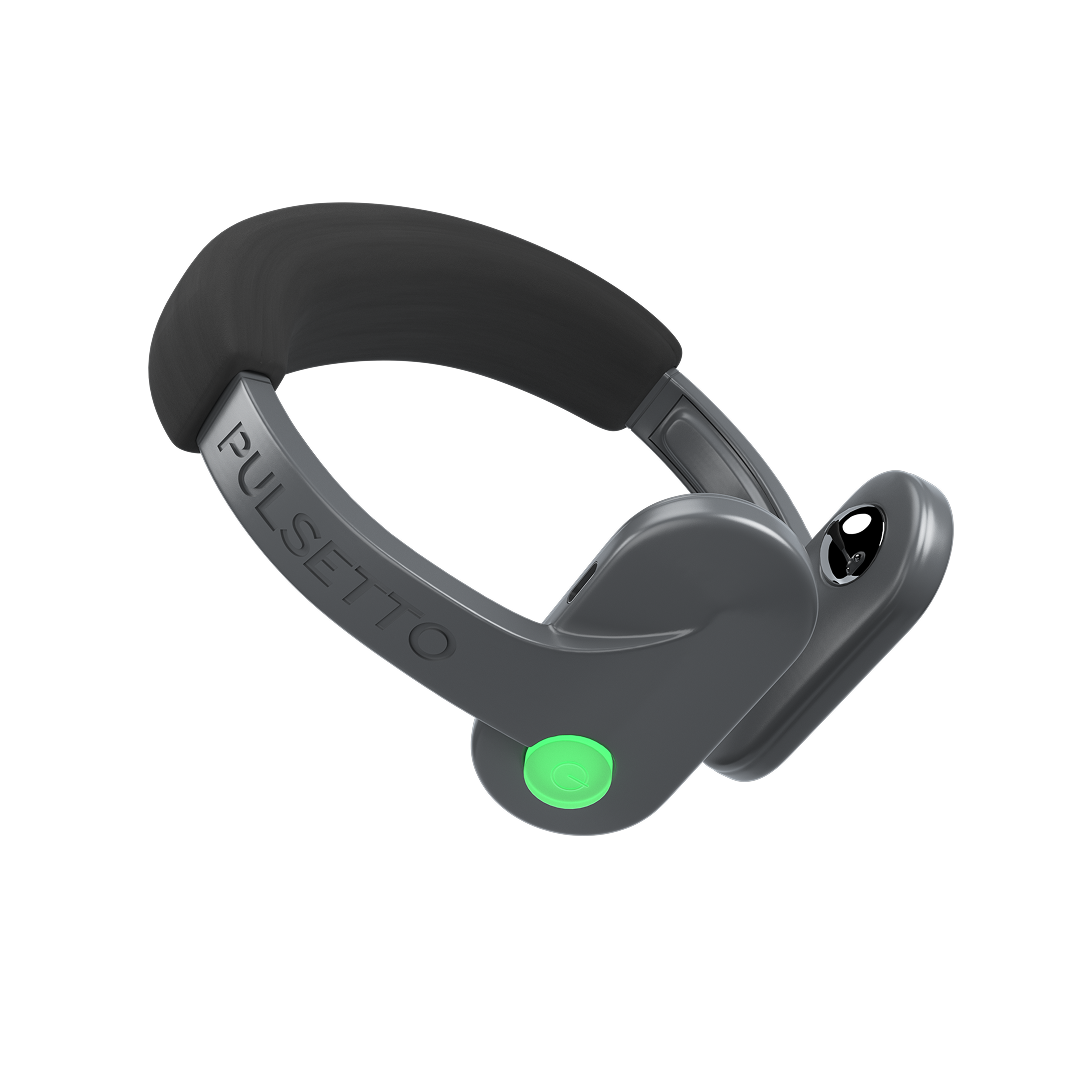
Pulsetto Vagus Nerve Stimulator
Pulsetto FIT bundle · Free shipping
$296 $570
✓ 30-day money-back guarantee · 2-year warranty
Order Pulsetto Now →How to Actually Respond to the Cortisol Craze
Put it all together and the sane response to 2026's most viral wellness panic looks like this:
- Don't self-diagnose "cortisol face" or "cortisol belly." They aren't medical conditions. If you have real symptoms, see a doctor who can run actual tests.
- Stop trying to eliminate cortisol. You need it. Aim to regulate a chronically activated stress response, not purge a hormone.
- Skip the detox teas. Put that money toward sleep, movement, and tools that engage your nervous system directly.
- Support the system, not the buzzword. Move 150 minutes a week, protect your sleep, get morning light, and train the parasympathetic brake through breathing or vagus nerve stimulation.
- Be as skeptical of quick fixes as of the panic itself. The same critical eye that debunks "cortisol face" should also filter the products sold to cure it.
The cortisol craze got one thing right: your nervous system deserves attention. It just pointed everyone at the wrong lever. The real one — the vagus nerve — has been there all along.
Stop chasing a hormone. Start calming your nervous system.
While the internet argues about cortisol, you can go straight to the source of calm. Pulsetto activates your vagus nerve — the body's real stress brake — in just 4 minutes a day, drug-free. Join thousands already resetting their stress the science-backed way, with up to $300 off and a 30-day money-back guarantee.
Claim Your Pulsetto Offer Now →Free shipping · 30-day money-back guarantee · 2-year warranty
Frequently Asked Questions
Is high cortisol really as dangerous as TikTok says?
For most people, no. Genuine cortisol disorders like Cushing's syndrome are rare — roughly 40 to 70 cases per million — and are usually caused by medication or tumors, not everyday stress. Experts, including a July 2026 Fox & Friends nutritionist segment, stress that "cortisol face" and "cortisol belly" are viral labels, not diagnoses. Chronic stress is still a real health issue worth managing — just not through panic or self-diagnosis.
What actually lowers cortisol, according to science?
Regular aerobic exercise (a 2026 year-long University of Pittsburgh trial found 150 minutes weekly significantly lowered long-term hair-cortisol), consistent sleep, morning daylight, and activating the parasympathetic nervous system through slow breathing or vagus nerve stimulation. These support the body's stress-regulation system rather than "detoxing" a hormone you need.
How does the vagus nerve relate to cortisol and stress?
The vagus nerve is the main pathway of the parasympathetic "rest-and-digest" system — the biological brake on the fight-or-flight response that drives cortisol release. Raising vagal activity through breathing, meditation or vagus nerve stimulation shifts the body out of the stressed state, which is the physiologically sound way to address chronic stress instead of chasing one hormone.
Can a device like Pulsetto help with stress?
Pulsetto is a non-invasive vagus nerve stimulator delivering gentle stimulation in about four minutes, with programs for stress relief, anxiety and sleep. It targets the parasympathetic system directly. The vagus nerve mechanism is established science, though consumer-device evidence is still maturing — which is why Pulsetto's 30-day money-back guarantee makes it a low-risk way to test the effect on your own stress and sleep.
References
- Fox News Health — "Think your cortisol is too high? Expert reveals the truth behind viral wellness craze" (Fox & Friends segment with dietitian Amy Shapiro), July 15, 2026. foxnews.com
- National Library of Medicine / NIH — prevalence data on Cushing's syndrome and Addison's disease.
- UC Davis — Cam Hostinar, Ph.D., on #CortisolLevels and #HowToReduceCortisol social-media claims (140M+ views).
- Gianaros P. J. et al. — one-year randomized clinical trial on aerobic exercise and long-term cortisol, Journal of Sport and Health Science, 2026 (University of Pittsburgh & AdventHealth Research Institute).
- Mayo Clinic — guidance on chronic cortisol elevation and its effects on the body.
Health note: This article is general information, not medical advice. If you have persistent symptoms or suspect a hormonal condition, consult a qualified healthcare provider for proper testing. Pulsetto is a wellness device and is not intended to diagnose, treat, cure or prevent any disease.