

Affiliate Disclosure: This website is an independent affiliate site. We may earn a commission if you purchase through links on this page, at no extra cost to you. See our full disclosure and editorial policy.
Short answer: most people trying to fall asleep faster are working on the wrong end of the day. Sleep onset is governed by two systems — a circadian clock set largely by morning light, and a physiological wind-down that depends on body temperature and nervous system state. The five approaches below are ordered by how much leverage each one has, and the first one happens fourteen hours before bedtime.
None of this is medical advice, and none of it treats insomnia. If you have been sleeping badly for more than three months, that is a clinical condition with an effective treatment — see a physician and ask about CBT-I specifically.
1. Get Bright Light in the Morning, and Fix Your Wake Time
This is the highest-leverage item on the list, and it is the one people skip because it feels unrelated to the problem.
Your circadian clock is set primarily by light hitting the eye, and it is far more sensitive to timing than to duration. Morning light advances the clock — it makes you sleepy earlier that night. Evening light delays it. If you wake in a dim room, commute in the dark and get your first real light exposure at 10am, you have effectively told your body that the day starts later, and then you are surprised when sleep does not arrive at 11pm.
What to do: get outside within an hour of waking, for ten to twenty minutes. Overcast still counts — outdoor light on a grey day is far brighter than any indoor lighting. And hold your wake time steady across the week, including weekends. Sleeping in on Saturday shifts your clock as effectively as a flight two time zones west, which is why Sunday night insomnia is so reliably common.
Wake time is the anchor. Bedtime follows it, not the other way around.
2. Use the Temperature Drop
Falling asleep is preceded by a drop in core body temperature of roughly one degree Celsius. This is not a side effect of sleep — it is part of the trigger. Anything that helps your body shed heat makes sleep onset easier, and anything that traps heat fights it.
Practical version:
- Keep the bedroom cool. Most sleep guidance lands somewhere around 18°C (65°F), with individual variation.
- Take a warm bath or shower about ninety minutes before bed. This sounds backwards and is not. Warming the skin dilates peripheral blood vessels, which then dump heat efficiently — core temperature ends up lower than if you had done nothing.
- Cool your hands and feet. They are the body's main heat-release surfaces. Cold feet genuinely delay sleep onset because they restrict the blood flow that offloads heat.
- Check your bedding before you buy a gadget. A heat-trapping mattress topper undoes a lot of thermostat effort.
3. Get Out of Bed When You Cannot Sleep
This is the least intuitive item and one of the best supported. It comes from stimulus control, a core component of cognitive behavioural therapy for insomnia — which, for chronic insomnia, is the recommended first-line treatment ahead of medication.
The logic is associative learning. If you spend an hour a night lying awake and frustrated, your brain learns that the bed is a place where you are awake and frustrated. Over weeks, the bed itself becomes an arousal trigger. People with this pattern often fall asleep instantly on the sofa and snap awake the moment they get into bed.
The protocol:
- If you are still awake after roughly twenty minutes, get up.
- Go to another room. Keep the lights dim. Do something quiet and undemanding — read a physical book, not a screen.
- Return to bed only when you feel genuinely sleepy, not merely bored.
- Repeat as many times as needed. Keep your wake time fixed regardless of how the night went.
It is uncomfortable for the first week and it works. Do not check the clock while doing it — timing your own failure to sleep is its own source of arousal.
4. Slow Breathing With a Long Exhale
Free, immediate, and it works through the same pathway as the device in the next section.
Your heart rate rises slightly on the inhale and falls on the exhale — an effect called respiratory sinus arrhythmia, mediated by the vagus nerve. Making the exhale longer than the inhale biases the autonomic system toward parasympathetic activity, which is the state sleep onset requires.
A simple pattern: inhale through the nose for four counts, exhale through the mouth for six to eight. Ten minutes. The exact numbers matter less than the ratio and the slowness — around six breaths per minute is where most of the effect appears.
Two things to know. It reduces physiological arousal; it does not stop a racing mind on its own, and expecting it to will make you frustrated. And it needs a few minutes to do anything — thirty seconds of deep breathing is not a fair test.
Pulsetto Vagus Nerve Stimulator
Pulsetto FIT bundle · Free shipping
$296 $546
✓ 30-day money-back guarantee · 2-year warranty
Order Pulsetto Now →5. Vagus Nerve Stimulation
This is the newest item and the one that needs the most careful framing.
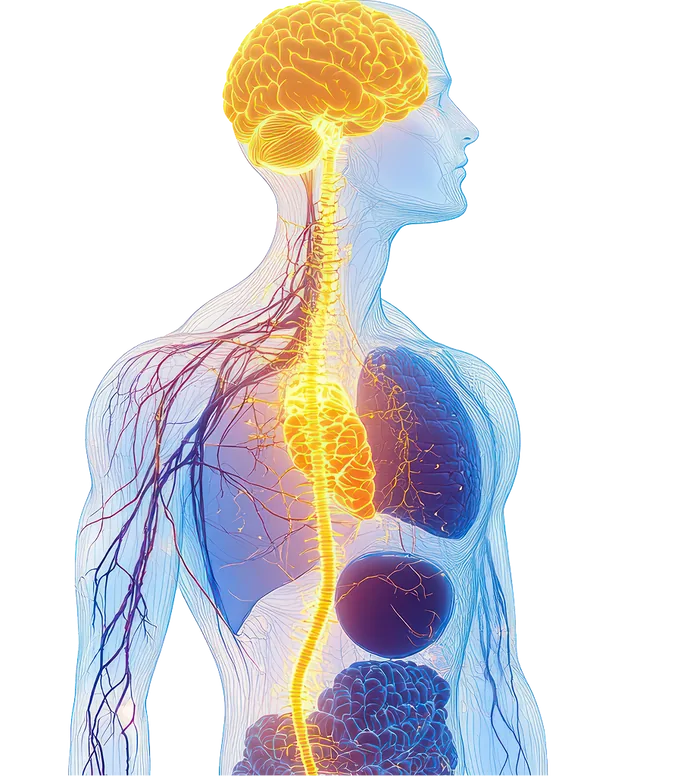
A transcutaneous stimulator delivers a mild electrical pulse to a branch of the vagus nerve at the neck or ear. The intended effect is the same direction as the breathing exercise above — a shift toward parasympathetic activity — delivered more directly and without requiring you to concentrate on anything.
What it is for: the arousal that keeps people awake. The tight chest, the churning, the sense that your body is still running at daytime settings. If your problem is that you lie down physically wired, this addresses that specific thing.
What it is not: a sedative, a sleeping pill, or a treatment for insomnia. It does not make you unconscious. Consumer stimulators are sold as general wellness products, not medical devices, and the evidence for sleep specifically is mixed — small studies, short follow-up, and the persistent problem that you can feel the stimulation, which makes placebo control difficult.
Practically, a four-minute session as part of a wind-down routine — after the shower, before the book, lights already dim — is how most people who get value out of one use it. And if you have an implanted electronic device, a cardiac arrhythmia, carotid artery disease, are pregnant or take medication affecting heart rate, talk to your physician before using one at all.
What Not to Bother With
- Alcohol as a sleep aid. It shortens sleep onset and then fragments the second half of the night. Net loss, reliably.
- Trying harder. Sleep effort is self-defeating — the harder you try, the more aroused you become. This is precisely why stimulus control tells you to leave.
- Long weekend lie-ins. Feels restorative, moves your clock, and makes Sunday night worse.
- Buying hardware before fixing light and schedule. No device compensates for an irregular wake time. Sequence matters.
A Realistic Routine
Assembling all five into one evening, with a target of lights out at 11pm:
- Morning: outside within an hour of waking, ten to twenty minutes. Same wake time every day.
- 9:30pm: warm shower. Drop the room temperature. Dim the lights.
- 10:30pm: screens down. Ten minutes of slow breathing, or a stimulation session if you use one.
- 11:00pm: lights out.
- 11:20pm, still awake: get up, dim room, physical book, return when sleepy.
Give it three weeks before judging. Circadian changes take days to consolidate, and one good night proves nothing either way.
Frequently Asked Questions
How long should it normally take to fall asleep?
Ten to twenty minutes is typical. Consistently over thirty minutes is prolonged sleep onset latency. Falling asleep in under five minutes most nights usually signals sleep debt rather than efficiency.
What is the single most effective drug-free change?
Bright light within an hour of waking, plus a consistent wake time seven days a week. Sleep onset is governed by a clock set in the morning — nothing at 11pm compensates for a drifted circadian rhythm.
Why does a cool room help you fall asleep?
Sleep onset follows a drop of about one degree Celsius in core temperature, and a cool room makes that easier. A warm bath ninety minutes before bed works through the same mechanism by dilating skin vessels so the body sheds heat faster.
Does lying in bed trying to sleep make it worse?
Usually. Stimulus control says to get up after about twenty minutes and do something quiet in dim light until sleepy. Lying there frustrated teaches your brain to associate the bed with wakefulness.
Can vagus nerve stimulation help with sleep?
It may help with the physiological arousal that keeps people awake, rather than acting as a sedative. The evidence for sleep specifically is mixed and comes from small, short studies. It is not a sleeping pill and not a treatment for insomnia.